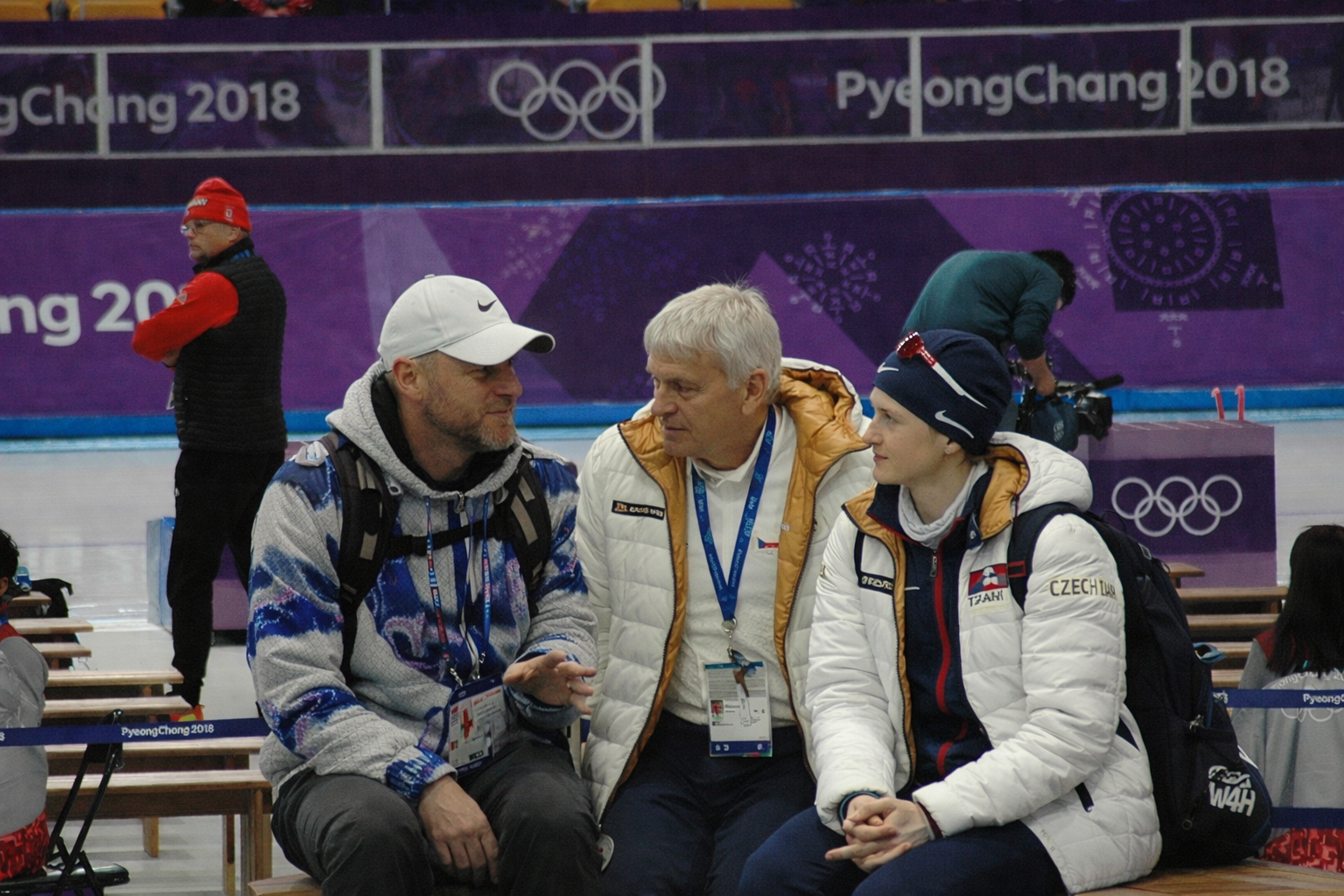
Martina Sáblíková’s farewell reveals what a career is truly about.
From the outside, the final lap of a long career seems little different from all the laps before it. The skater bends once again and launches her strokes on the same ice where she trained, won, and lost for all those years. Yet, everyone at the trackside senses that something changes when it’s the last time. With that lap, not only does a competition end, but an era.
Martina Sáblíková stepped off the ice after a career that spanned twenty-three years. During those winters, she became one of the great names of international long track speed skating. Her name topped the results for years, and her presence shaped the rhythm of the long distances for more than a decade.
Anyone who looks at her record of achievements sees an impressive chapter in the history of the sport (including speed skating). In Vancouver, she skated to Olympic gold in the 3000 meters and a few days later again in the 5000 meters. Four years later, she repeated that feat in the 5000 meters in Sochi. In addition to those three gold medals, she also won silver and bronze, bringing her Olympic total to seven. At world championships, she won sixteen titles in the distances and five all-around titles. For years, she set the pace in the 3000 and 5000 meters, and in several seasons, she won the World Cup in the long distances.
That is the story of her achievements that she didn’t share during her farewell speech.
The rights are for Nu.nl!
When asked about her final lap, her words went to the crowd. The applause that greeted her visibly surprised her. She spoke of how special it felt to share that moment with the people in the stands and how unexpected it was for her to receive such loud applause.
Gratitude resonated in everything she said.
The question of what she would miss most followed naturally. Her answer wasn’t about winning, nor about titles. She spoke about the people who had surrounded her all those years. About the ice where she felt at home. About the friendships formed along the way, which had filled her career with more than just competitions.
In the middle of that answer, a sentence came that speaks volumes about her relationship with the sport. When she was on the ice, it felt like being herself. Those words give twenty-three years of elite sport a new meaning. The ice became not only the place where times were set and championships were decided. It also became an environment she returned to again and again, where familiar faces met winter after winter. Within that world, conversations arose, mutual respect grew, and a community formed around a sport that connects generations.
At the end of the conversation, she was asked one more question. What wouldn’t she miss? She thought for a moment and answered simply: “The stress, basically.” That short answer sheds a clear light on her entire career. The pressure of expectations and the tension of having to perform are part of elite sport and disappear the moment a career ends. What remains are the people with whom you shared those years.
Her list of achievements will live on in the history of speed skating: Olympic titles, world titles, and a long period where she was the strongest over the long distances. Her own words tell a different story. There, it’s not about prizes, but about people. There, it’s about a sport that became a home and about the community that grew around it. But it’s also about the faces you meet again, season after season, and who slowly become part of your life.
Even when she speaks of the future, that remains the same. The thought of one day returning as a coach is about staying connected to those same people and to the sport that carried her for twenty-three years. The times of her races remain stored somewhere. The medals are in display cases. The results are in the history books.
What her farewell reveals is that the true value of twenty-three years of elite sport doesn’t lie in those numbers.
That value is visible along the ice.
https://commons.wikimedia.org/w/index.php?curid=67752811
