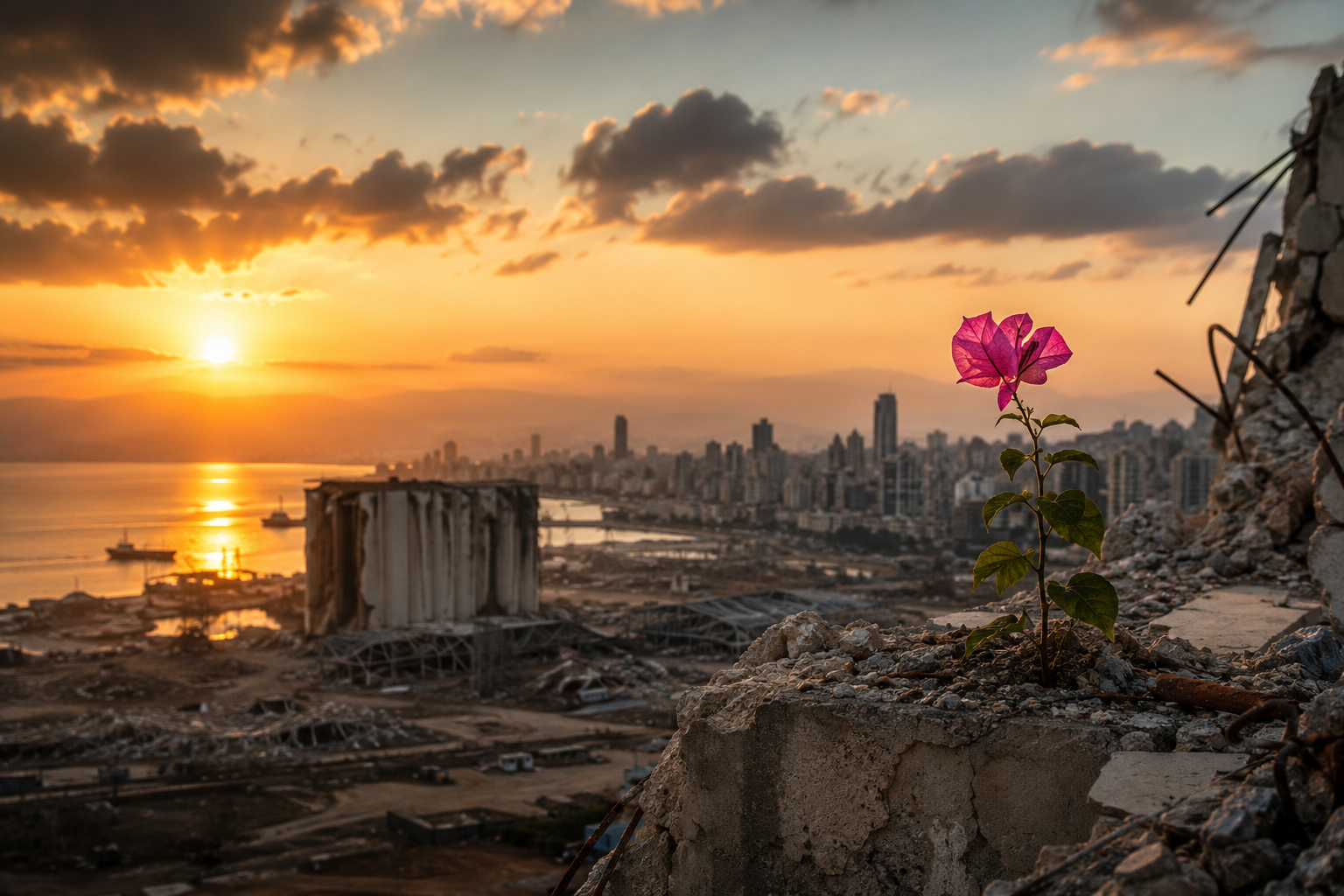
A few days ago, I received a message from Josephine in Beirut. In a few days, it will be six years since the explosion that devastated the city’s port. For her, that date is far more than a memory of a global news event that once dominated the headlines. On August 4, 2020, she was on the twenty-third floor of her apartment, right in the area struck by the massive blast wave. The grain silos along the port absorbed much of the explosion, sparing her building from the full force of the shockwave. Even so, windows were blown from their frames, doors were torn from their hinges, and an ordinary working day turned, within seconds, into a memory that would last a lifetime. Josephine and her colleagues happened to be on the side of the apartment facing away from the explosion. That single detail made all the difference.
Attached to her message was a short video. As I watched the images, something unexpected happened. My attention was no longer drawn to the explosion itself. Those images have been etched into my memory for years. Instead, it was the song beneath the video that refused to let go of me. An unfamiliar melody, carried by lyrics that managed, in just a few lines, to express what thousands of photographs and hours of news coverage could barely convey. The song opens with an image that immediately captures the scale of the disaster.
The sky was amber, then it split.
A second sun that shouldn’t exist.
Anyone who remembers the footage from that day will immediately understand the meaning of that “second sun.” The fireball transformed Beirut’s skyline into something almost unreal. Moments later, the lyrics describe glass falling like rain, the port becoming a wound, and half the city breaking apart in a single instant. The words never reach for drama. Their quiet simplicity leaves room for the listener’s own imagination. Yet another part of the song lingered in my mind far longer.
But hands came out from under stone.
No one was left to bleed alone.
I read those lines several times. Not because of their poetic beauty, but because of what they reveal. The explosion is only the beginning of the story. The people are what comes next. As buildings collapse and clouds of dust cover the city, hands emerge from the rubble. Hands reaching for help, hands lifting others to their feet, hands deciding that, in that moment, a stranger’s life matters just as much as that of a friend or family member.
Those few words capture something that every major disaster eventually reveals. When structures fail, humanity remains. Neighbours become rescuers. Volunteers begin clearing the streets while the sirens are still echoing. People who had never met carry one another to safety. In a world where division so often dominates the conversation, tragedy can also reveal the extraordinary strength hidden within simple human compassion.
That is why this song stayed with me. I searched for its creator. I looked for a full recording, an artist’s name, an official release. So far, I have found nothing. It appears to have been created especially for this remembrance and lives on mainly through the video in which I first heard it. Somehow, that feels entirely fitting. Not every song needs a place on the charts. Sometimes music is created for a single purpose: to remember what must never be forgotten. Towards the end, the lyrics change their tone once again.
The scars remain.
The memories stay.
The dust has settled.
But not the debt.
That final line echoed in my thoughts long after the song had ended. The dust eventually settles. Responsibility does not. Neither do the scars. Buildings can be rebuilt. Trust takes far longer. The song closes with four simple words.
Beirut doesn’t forget.
I believe those words speak far beyond the city itself. They remind all of us that behind every major tragedy are people who continue to carry its memory every single day. For Josephine, August 4 is not a date confined to history. For thousands of people in Beirut, it never will be.
On August 4, I will once again pause to reflect on this tragedy. Not only on the explosion itself, but also on the resilience of the people who held one another up when their city was at its most vulnerable. This unknown song became my invitation to listen once more to a story that still deserves to be heard. Sometimes, a handful of simple lines is all it takes to reveal the true essence of humanity.
