Mythbuster – The Hidden King and Lula’s Victory
In 1578, a young Portuguese king disappeared on a battlefield in Morocco. His name was Dom Sebastião, and his army suffered a devastating defeat at the Battle of Alcácer-Quibir. The king never returned, and the uncertainty surrounding his fate gave rise to a story that would survive for centuries. Many believed he had never died. Somewhere, he was hiding, waiting for the right moment to return and lead his people towards a better future.
This was the beginning of Sebastianism, the myth of the hidden king, known in Portuguese as O Encoberto. Sebastião’s return was expected to free Portugal from its troubles and usher in a new era of prosperity. The belief gained even greater significance when Portugal came under the Spanish crown in 1580. The longing for a missing king became intertwined with the hope of restoring national independence. What began as uncertainty about the death of a monarch gradually developed into a belief in which political expectations and religious ideas became closely connected.
The story eventually travelled to Brazil, where it took on a life of its own. Particularly among communities with little prospect of improving their circumstances, the expectation of a returning saviour acquired a deeper meaning. In the Brazilian state of Maranhão, a remarkable variation of the legend emerged. According to local tradition, Dom Sebastião continues to exist on Ilha dos Lençóis in the form of an enchanted bull, recognisable by a white star on its forehead. When the enchantment is finally broken, he will regain his human form and bring wealth to the poor.
It is a remarkable evolution of a myth. A Portuguese king who disappeared almost four and a half centuries ago continues to live on, on another continent, as a symbol of hope for a more just existence. In this form, Sebastianism tells us something profound about the people who continued to pass the story from one generation to the next. They longed for a world in which poverty, oppression and uncertainty would finally give way to a life of greater human dignity.
At the same time, this myth raises an intriguing question. Why do people so often expect their problems to be solved by one extraordinary leader? Why do societies continue to hope for someone who will return, restore order and offer them a better future? The longing is understandable, especially when people feel they have little influence over their own circumstances. Yet the conviction that one person determines the future of an entire nation can also prevent us from recognising our own responsibility.
This brings us to the myth I want to examine today. Sebastianism is a living cultural and spiritual tradition that deserves to be understood within its historical context. The political belief that a people must wait for a chosen saviour, however, is something we can certainly examine critically. A society that entrusts its entire future to a single leader becomes dependent on that person’s presence, judgement and willingness to share power. In a democracy, that dependence should be limited by the voice of the people, by the law and by institutions that stand above individual rulers.
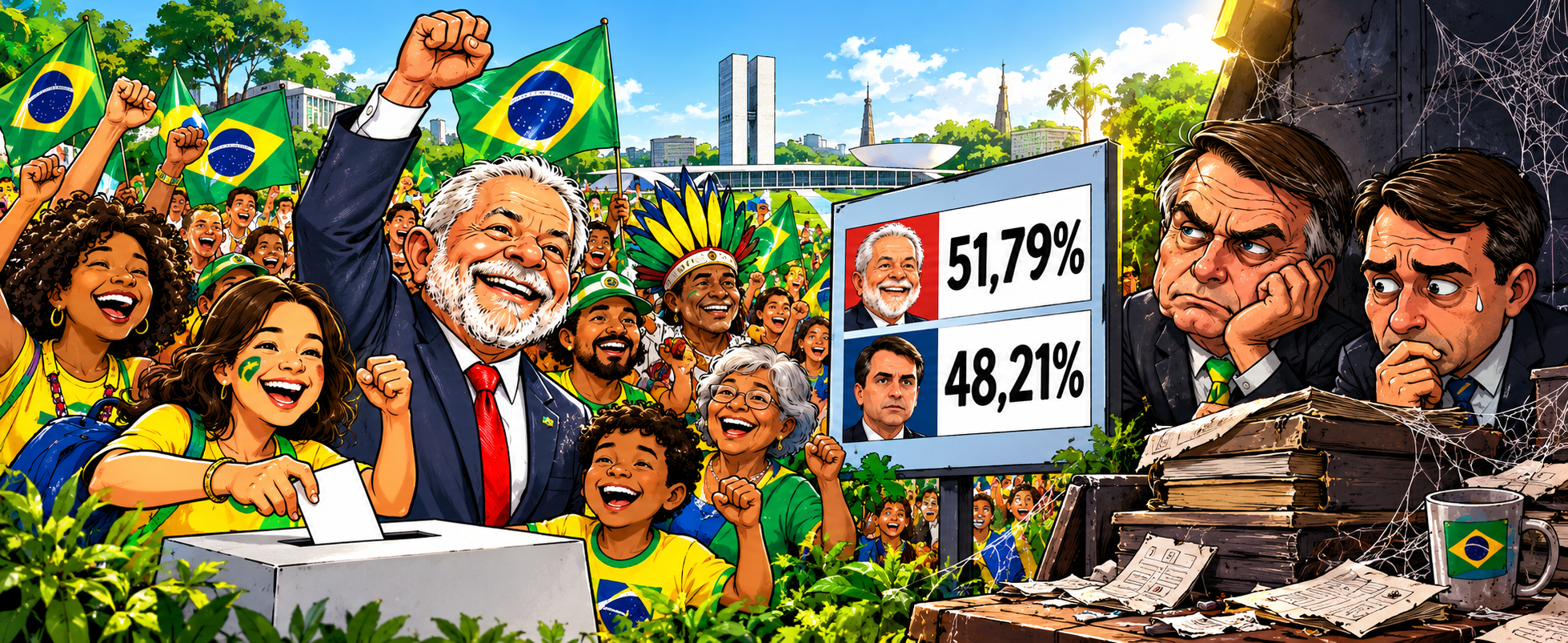
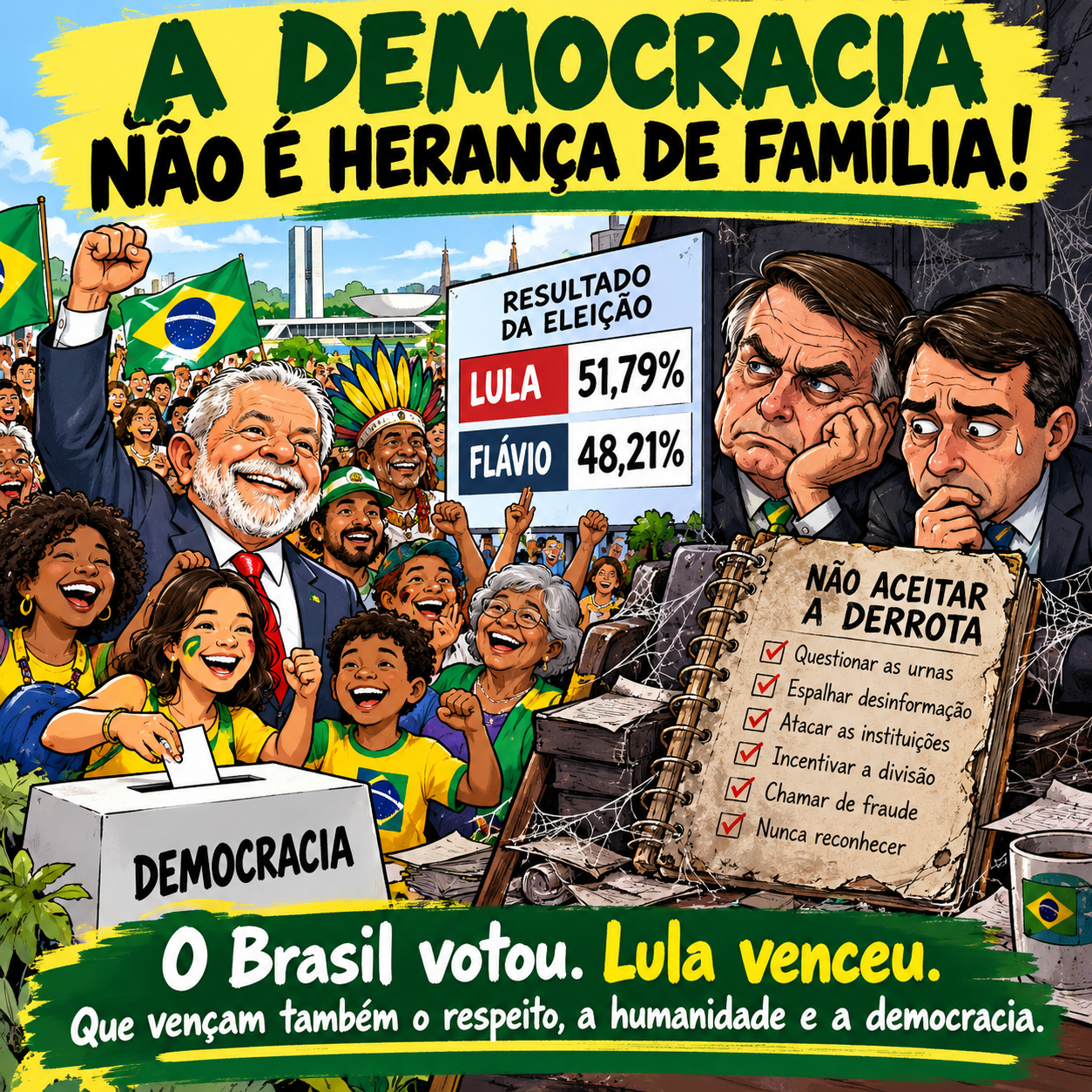
On Sunday, October 25, 2026, Brazil once again demonstrated how this democratic principle works in practice. Luiz Inácio Lula da Silva won the presidential election with 51.79 percent of the valid votes. His opponent, Flávio Bolsonaro, received 48.21 percent. More than 64 million Brazilians voted for Lula, while almost 60 million placed their trust in Bolsonaro. These figures reveal how politically divided the country remains, while also demonstrating the importance of ensuring that every vote carries equal weight.
There is an interesting historical parallel in this election. Flávio Bolsonaro is the son of former president Jair Bolsonaro. Within political families, names, networks and convictions can be passed down from one generation to the next. There is nothing inherently undemocratic about this, provided that citizens remain free to decide whom they wish to trust. A family name may carry political significance without creating a hereditary right to the presidency. Ultimately, it is the electorate that determines who will be entrusted with the responsibility of governing the country.
Following the election result, Flávio Bolsonaro announced that he would not recognise his defeat and intended to challenge the outcome. The dispute concerns a controversial decision to extend voting hours at certain polling stations because of difficulties experienced on election day. Both candidates had requested an extension. The right to seek judicial review of electoral procedures is an essential part of a democratic society governed by the rule of law. That is precisely why any objections must be examined carefully and why the outcome of that examination must be respected. Democracy, after all, demands more from us than simply trusting elections when our preferred candidate wins.
And then there is Lula himself. His life story explains much of why he holds such special significance for so many people. He grew up in poverty, became a metalworker, developed into a trade union leader and played an important role in the labour movement during Brazil’s military dictatorship. His political career has included successes, defeats and controversies. By now, he has won four presidential elections spanning almost a quarter of a century.
To me, Lula is a people’s hero. Not because I believe he possesses all the answers or that his political decisions should be beyond criticism. My admiration comes from his background, his connection with the labour movement and the significance his life’s journey has acquired for people who recognise themselves in the struggle for a dignified existence. His election victory fills me with hope because I believe that addressing poverty, education, healthcare and basic economic security is fundamental to the development of any society.
This also places a considerable responsibility on Lula’s shoulders. His victory gives him a renewed democratic mandate, while nearly half the electorate envisioned a different political direction. Those people do not disappear from society once the votes have been counted. They remain Brazilians, with their own concerns, experiences and expectations. Anyone seeking to govern a divided country must also engage with citizens who chose not to place their trust in him.
This is where the most interesting contrast with the myth of Dom Sebastião emerges. The hidden king was expected to return as someone whose extraordinary destiny would enable him to save his people. A democratically elected president receives his mandate from the citizens and must remain accountable to them. His authority is limited by law, his policies can be criticised and his mandate has an expiration date. These limitations are precisely what protect a society against the belief that political power can become the personal property of a leader.
Today, October 27, Lula also celebrates his 81st birthday. Just two days after his election victory, it is a remarkable moment to reflect on a life that began in humble circumstances and eventually reached the highest political office in Brazil. I therefore wish to congratulate him wholeheartedly on his birthday and his re-election. My congratulations also extend to the Brazilian people, who have once again accepted the responsibility of shaping their future through the ballot box.
The centuries-old myth of Dom Sebastião arose from the longing for a king who would one day return and change everything for the better. Almost four and a half centuries later, Brazil demonstrates that a nation’s future can also be shaped through the collective choice of its citizens. This requires continued involvement beyond election day, respect for democratic institutions and leaders who understand that the trust of the people can never be taken for granted.
I hope that Lula will be able to honour that trust in the coming years through humanity, justice and attention to those who most urgently need the support of their society. Ultimately, the value of democracy lies in something that the ancient myth of the hidden king unintentionally helps us understand: a people does not need to wait for a chosen ruler to return before it can begin moving towards its future.
That future begins with the people themselves.
Parabéns, presidente Lula. Feliz aniversário e parabéns pela sua vitória. Parabéns também ao povo brasileiro. Que a democracia, a humanidade e a justiça continuem guiando o futuro do Brasil.
Sources and references
1. Fundação Joaquim Nabuco — Sebastianism in Northeastern Brazil
Gaspar, Lúcia (2006, updated 2021). Sebastianismo no Nordeste brasileiro. Fundação Joaquim Nabuco, Recife, Brazil.
Historical background on Sebastianism, its origins in Portugal and its development within Brazilian religious and cultural traditions.
Read the source – Fundação Joaquim Nabuco
2. Universidade Nova de Lisboa — The Battle of Alcácer-Quibir
Vila-Santa, Nuno (2012). Batalha de Alcácer-Quibir. Enciclopédia Virtual da Expansão Portuguesa, Universidade Nova de Lisboa.
Historical account of the battle of August 4, 1578, in Morocco, during which King Dom Sebastião died.
Read the source – Universidade Nova de Lisboa
3. Universidade Estadual do Maranhão — The Legend of the Enchanted Bull
Zierer, Adriana (2024). Cururupu e a Ilha dos Lençóis: O domínio mítico de D. Sebastião no imaginário maranhense. Outros Tempos, Volume 21.
Academic research on the transformation of the Portuguese Sebastianism legend into the Brazilian tradition of the enchanted bull on Ilha dos Lençóis, Maranhão.
4. Tribunal Superior Eleitoral — Brazilian Presidential Election 2026
Tribunal Superior Eleitoral (October 26, 2026). Presidente do TSE anuncia reeleição de Lula e faz balanço do 2º turno das Eleições 2026.
Official confirmation of the presidential election result of October 25, 2026:
Lula: 64,256,232 votes (51.79%).
Flávio Bolsonaro: 59,826,041 votes (48.21%).
Official election results – TSE Brazil
5. Agência Brasil — Flávio Bolsonaro Challenges the Election Result
Vilela, Pedro Rafael (October 26, 2026). Flávio Bolsonaro rejects Lula’s victory, seeks to annul election. Agência Brasil.
Reporting on Flávio Bolsonaro’s refusal to recognise the election result and the legal controversy surrounding the extension of voting hours.
Read the article – Agência Brasil
6. Brazilian National Archives — Biography of Luiz Inácio Lula da Silva
Arquivo Nacional do Brasil. Luiz Inácio Lula da Silva – Biografia.
Biographical information about Lula’s early life, his work as a metalworker, his trade union activities and his political career. Confirms his date of birth as October 27, 1945.
