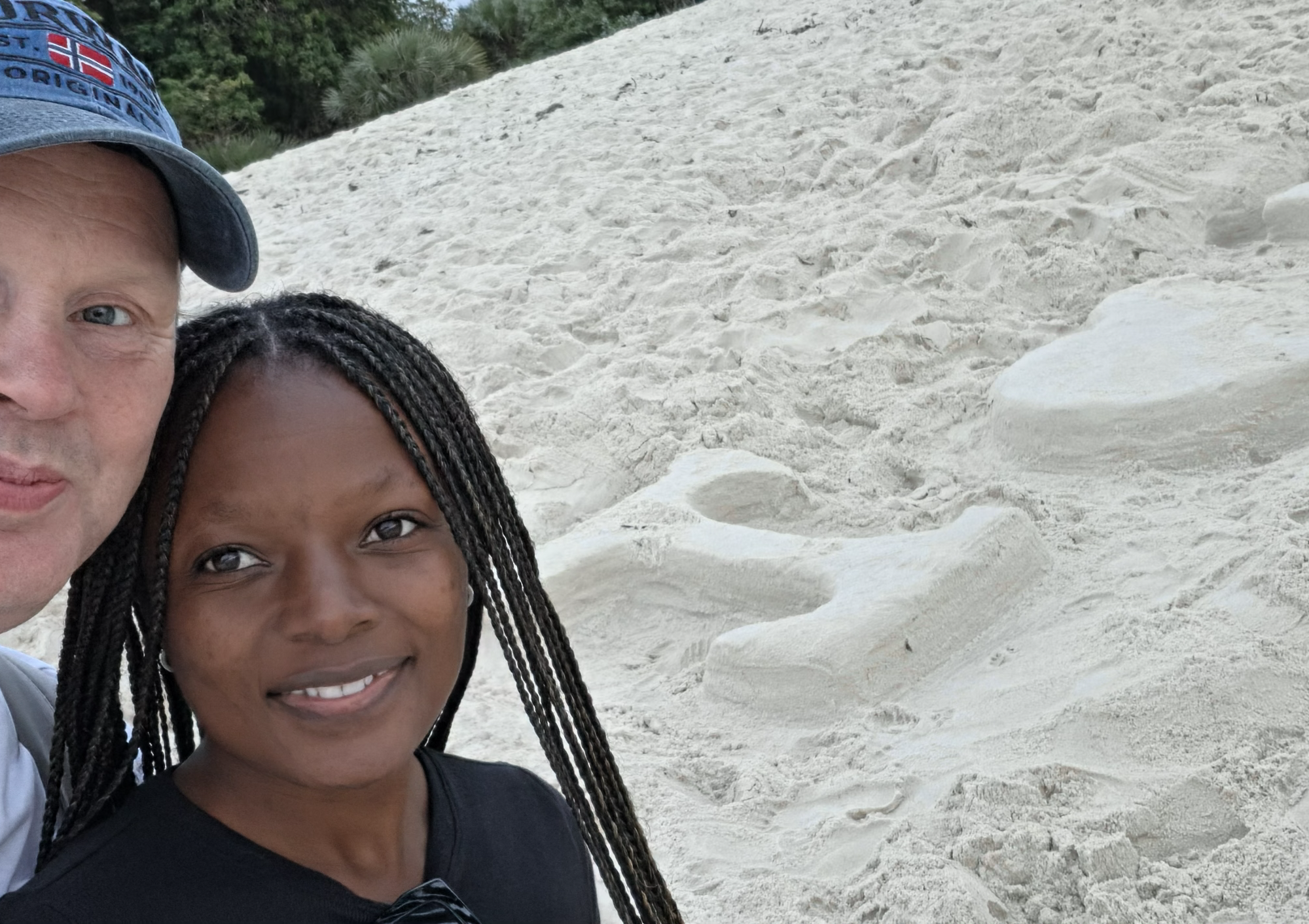
For a long time, I thought Mimah was pronouncing an English word in her own way. Whenever I said something sweet to her, told her how beautiful I thought she was, or used words that apparently rolled off my tongue a little too smoothly, she would look at me and say, “Mistari, mistari, mistari.” I heard mystery. I had no idea why that particular word would make sense in those moments, although plenty of things between people don’t need an explanation to be understood. At least I knew what she meant. There was Ante again, with his beautiful words.
Then I discovered that mistari wasn’t mispronounced English at all. It was Swahili. The plural of mstari, a word that can mean a line, a line of text, or a verse. Mistari ya Biblia: Bible verses. When I read that, I had to laugh. My nickname is Apostle, and apparently, there I was in Kenya, reciting verses to a woman who gently kept reminding me of it. Suddenly, the whole story became even more amusing than it already was.
At the same time, it got me thinking, because we have a rather peculiar relationship with people who are good with words. When someone says, “You certainly know how to talk,” it isn’t always meant as a compliment. We all know the smooth talker, the salesperson who convinces you to buy something you never wanted, or the charmer who knows exactly which words to use to get what they want. Someone who speaks easily can quickly become someone whose intentions are questioned. Language then stops being a way of expressing something and becomes a tool for influencing or manipulating another person.
Words have played an important role throughout my life. A large part of my professional work revolves around them. Consulting means talking and, above all, listening. It means sharing insights, helping people establish priorities, and occasionally delivering a message you already know someone would rather not hear. Even difficult news can be communicated in a way that leaves the other person feeling respected. That doesn’t require making the truth sound prettier than it is. It requires paying attention to the person sitting opposite you. Words carry meaning, and they also carry warmth. The same message can be delivered coldly or with kindness, without changing a single fact.
I believe I’m good at that. After all these years, I think I’m allowed to acknowledge it. I know how to talk, I can find the right words, and I usually have a fairly good sense of what those words do to someone. You can use that ability to steer people in a particular direction. You can also use it to genuinely connect with them. The difference isn’t in how beautiful the words sound. The difference lies in what you’re trying to achieve with them.
With Mimah, I don’t have to think about any of that for very long. I find her incredibly beautiful and sweet. When I tell her so, it doesn’t come from some carefully considered communication strategy. I say it because it’s what I feel and because I want her to know it. She might then look at me with that expression that combines amusement with a hint of playful accusation and say, “Mistari.” As though she has caught me delivering yet another collection of beautiful lines. And I can see what those words do to her. They make her happy. And seeing her happy makes me happy. I don’t think human communication always needs to be much more complicated than that.
Yet we regularly make it more complicated. We seem to have become increasingly cautious about giving compliments, especially when they become personal. There is an understandable reason for that. A compliment is only pleasant when the person receiving it can experience it that way. Context matters, as does the relationship between two people, the way something is said, and the freedom someone has to respond differently. Speaking respectfully also means paying attention to how your words affect the other person. That is precisely where the difference lies between giving someone attention and demanding their attention.
Still, that awareness doesn’t have to silence us. I would find it a shame if being careful eventually meant keeping more and more kind thoughts to ourselves. When someone does something that touches you, you can tell them. When someone is particularly kind to you, you can let them know how much you appreciate it. When you admire the way someone approaches life, that admiration doesn’t have to remain locked inside your head. And when someone dear to you stands before you looking absolutely wonderful, it can mean a great deal to them not to have to guess what you’re thinking.
We save a remarkable number of beautiful words for moments when they almost come too late. At anniversaries, we tell people what they mean to us. When someone leaves, we express our appreciation. At funerals, people hear how much love and admiration someone inspired throughout their life, while the person being remembered can no longer hear those words. Apparently, we have the words all along. The question is why we so often wait before speaking them.
Beautiful words don’t need a hidden agenda. A compliment doesn’t have to be a transaction. Affectionate language doesn’t have to ask for anything in return. Of course, smooth talkers exist, and words can certainly be used to influence people. That doesn’t make sincere words any less sincere. It simply asks us to remain honest about our intentions and attentive to the person receiving them.
That is ultimately what Mimah has reminded me of through a single Swahili word. She uses mistari whenever I find words that, in her opinion, sound just a little too beautiful. At first, I heard a mispronounced English word. Then I discovered lines, verses, and language. By now, I hear something else entirely: the freedom to call something beautiful simply because it is beautiful.
So let it be mistari.
If someone matters to you, tell them. If someone touches your heart, put it into words. If you’re grateful for something someone has done, don’t let that gratitude remain merely a thought. And if someone stands before you who naturally makes your heart feel a little softer, you don’t always have to be sensible enough to remain silent about it.
Words can deceive, and words can hurt. They can also bring warmth, create connections, and make someone feel, even for a moment, that they are truly seen. We don’t need to be so economical with them.
